Buy more motifs – save more: 10% off for 2, 20% off for 3+

Free shipping and fast delivery


Popular right now


Currency

Buy more, save more 10% off 2 · 20% off 3+

Cart 0

Congratulations! Your order qualifies for free shipping You are 0 kr away from free shipping.
Pair with
Sorry, looks like we don't have enough of this product.

Subtotal Free
Shipping, taxes, and discount codes are calculated at checkout

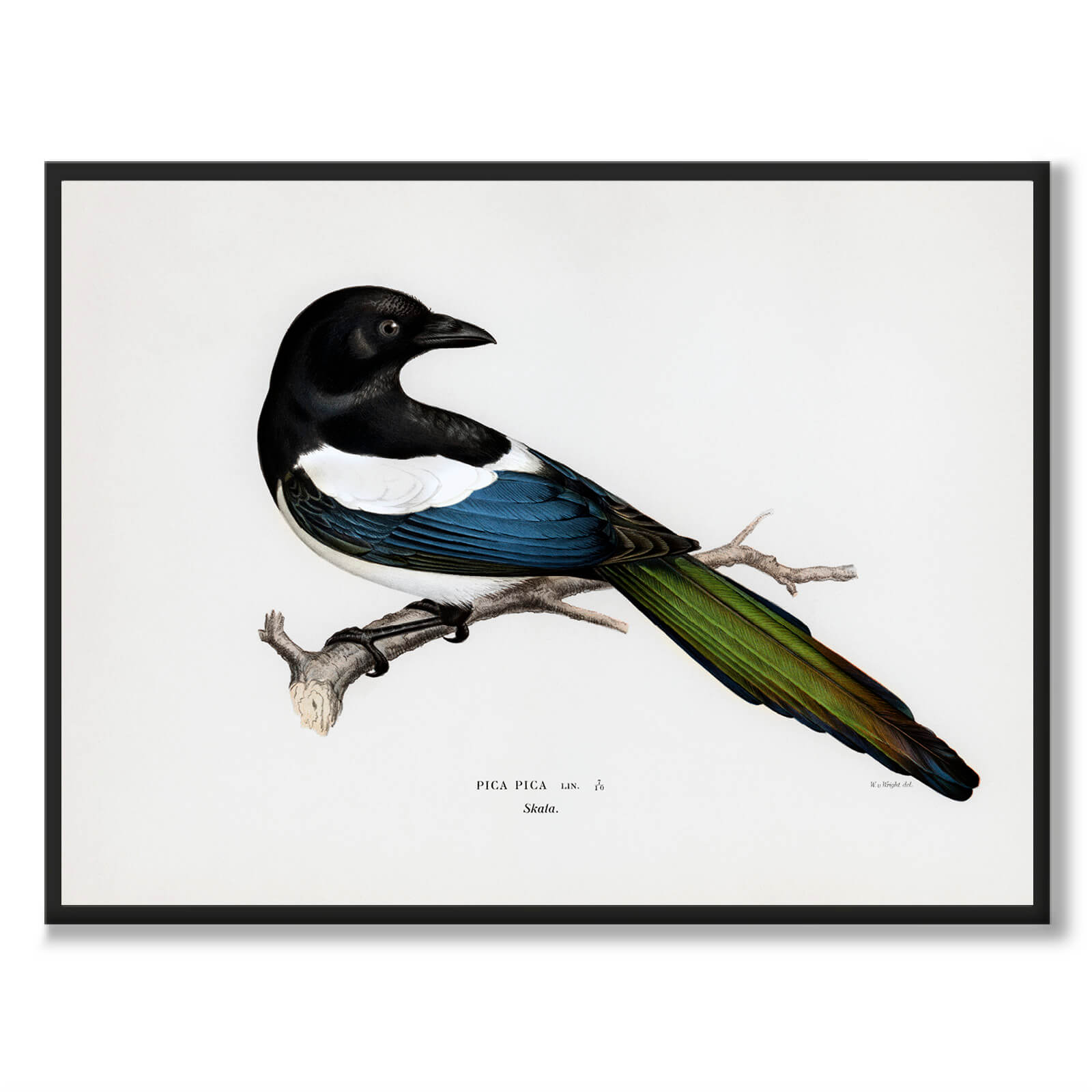
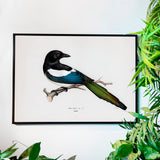
Pica Pica as a vintage zoological illustration and poster from Historly – image 1
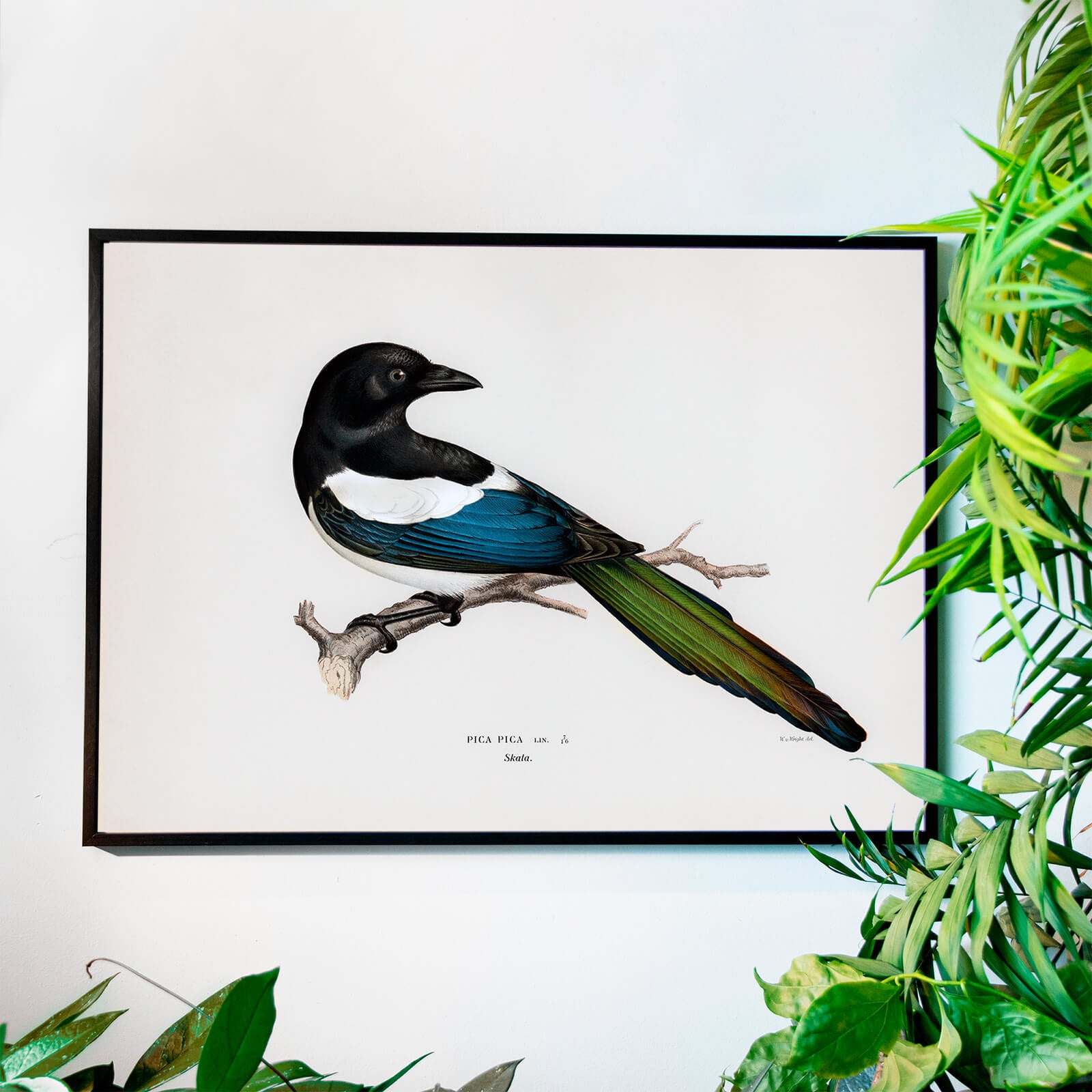
Pica Pica as wall art in an inspiring interior setting
Close-up of 230 g museum-quality paper – the paper on which Pica Pica is printed

Pica Pica

Regular price 369 kr
Taxes included.
From the archive
From the archive
A Bird Book That Grew
The 1929 edition of Svenska fåglar was far larger than the first: during the work, around one hundred previously unknown plates were discovered in the Helsinki University Library. The original series from 1828–38 had 184 hand-coloured lithographs without text; the later edition comprised 364 plates and commentary by zoologist Einar Lönnberg.
Historly

Buy more posters – save more

10% on 2 posters · 20% on 3+
The discount is applied automatically at checkout.

Size30x40
Popular

4.9 average from thousands of reviews

1–3 day delivery time

Free climate-compensated shipping


The story behind the motif

Poster with old illustration of one of Europe's all-time most feared and influential birds - the magpie. On the picture we can read Pica Pica , Latin for the bird species and it was published in the book Swedish Birds After Nature in 1929.

The magpie is one of the most intelligent animals on earth. Based on studies done, their intelligence appears to be on par with chimpanzees, gorillas and orangutans. The magpie's intelligence lies in its social patterns, imagination, reasoning ability and ability to predict things. They have complex social rituals and can express grief. They hide and store food and can portion out their food in perfect proportions for their young. In captivity, magpies have been seen imitating human voices.

In Western European folklore and Norse-Germanic mythology, the magpie is associated with a number of superstitions and is seen as an omen of misfortune. However, killing a magpie was believed to bring bad luck in Germany, France and not least Scotland. In Sweden, the magpie was associated with witchcraft, and in Norwegian folklore it was believed to be a cunning bird of the underground being called Huldra.

Illustrator: The Von Wright Brothers | Created: about 1929.

Frame not included.

Please note that the images are cropped slightly differently depending on the size you choose. Read more about image and image quality here: FAQ .

Paper & Print

Frame not included with posters and must be purchased separately - either via the popup that opens when you add to cart or via our frames collection page.

Our posters are printed on matte, museum-quality paper weighing 230 gsm, with a subtle texture that gives the motif remarkable depth and vibrant color reproduction. Thanks to the paper’s exceptional quality, you can expect durability of up to 60 years if you avoid strong sunlight or other strain.

Shipping & Delivery

Where do we deliver?

We deliver worldwide and always offer free shipping! Depending on which country you are shipping to, delivery may involve additional customs duties and taxes – there are no customs duties or taxes on deliveries within the EU or Norway.

When will I receive my goods?

Delivery time is normally 1–3 business days within the Nordic countries, 2–5 to the rest of Europe, and 3–8 business days to the rest of the world.

If you order from Norway, your order will be delivered with FedEx; to Sweden and the rest of the world, with DHL.

Your package is normally delivered to your nearest pickup point!

Pica Pica

369 kr Regular price
Slide image

Exclusive paper

Our posters are printed on 230 gsm matte museum-quality paper. The paper has a soft surface with a subtle texture and a warm tone that gives the motifs remarkable depth and rich color reproduction.